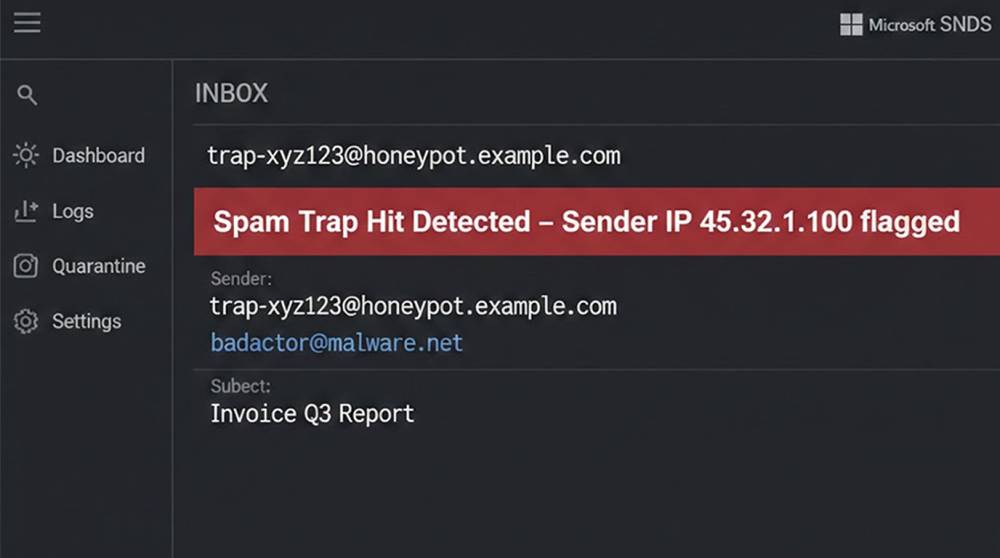
Spam traps (sometimes called honeypot emails or spamtrap addresses) are email addresses that no real person ever owns, uses, or signs up with. They exist only to catch spammers. The second any message lands in one of these addresses, that sender’s IP address and domain get marked as a spam source. That information gets sent to major blocklists and reputation systems: Spamhaus, Spamcop, Barracuda, SORBS, Microsoft SNDS, Google Postmaster Tools, and others , which then start rejecting or spam-filtering mail from that sender across millions of inboxes.
These traps are passive, silent, and incredibly effective. They’ve been quietly ruining spam campaigns for over twenty years and they still work just as well in 2026.
How Spam Traps Actually Catch People
1. Pure/pristine traps : never belonged to anyone. One single email = instant flag and usually a fast blocklist entry.
2. Recycled traps : old addresses that got abandoned and turned into traps. Some allow a couple of hits before they trigger.
3. Typo trap addresses like gmial.com, yah00.com, hotmial.com, outloo.com are examples of fake domains.
4. Seeded traps are a type of trap that has been created intentionally for the purposes of automatic collection by scrapers that may collect publicly accessible data (data dumps), old data from data breaches, questionable/suspicious signup forms, or comment sections.
Once triggered, the sender’s reputation drops fast. Deliverability crashes, emails bounce or go to spam folders, and getting removed from blocklists can take days to months (if it happens at all).
Real-World Examples of Spam Traps in Action
1. Marketing Company Buys a Cheap List A small e-commerce brand buys a “5 million fresh emails” list for $100 from a shady broker. Unknown to them, 4–8% of the addresses are traps (very common in low-quality lists). They send a big promotional blast → traps receive the mail → multiple IPs hit Spamhaus ZEN and Gmail’s bulk sender guidelines → open rates drop from 25% to <2% within 48 hours and half the campaign gets blocked outright.
2. Phishing Group Uses Breach Data Attacker downloads a 2023 breach dump → sends “Your password was found in a leak – reset now” to millions. Trap addresses seeded into that old breach collection years ago receive the message → sender domain and IPs get added to Microsoft’s JMRP and Google’s spam filters → phishing emails start bouncing or landing in spam at major providers within a day.
3. Botnet Scrapes Forums & Directories Malware on infected PCs scrapes email addresses from comment sections, old forums, and business directories. Many of those sites had traps planted years earlier (researchers or providers did it quietly). Botnet sends spam waves → traps fire → C2 IPs and sending domains get blacklisted on Spamcop and Talos → spam volume from that botnet drops by 70–80% in a week.
4. Shady Bulk Sender Ignores Complaints A low-end ESP keeps blasting despite high spam complaints. Trap hits accumulate over days → Outlook and Gmail throttle the entire IP range → the ESP loses most of its paying customers overnight because their clients’ campaigns stop delivering.
How Legitimate Senders Accidentally Hit Traps
1. Old, never-cleaned subscriber lists with dormant addresses that got recycled into traps.
2. Partner or affiliate leaks/sells your list → traps inside it.
3. Forms or landing pages on your site get scraped by bots → traps planted there catch you later.
4. “Opt-in” lists purchased from brokers that are actually scraped or fake.
How to Stay Out of Spam Trap Trouble
1. Always use confirmed double opt-in (user clicks confirmation link).
2. Regularly perform scrubbing of lists against trap-checking services, such as ZeroBounce, NeverBounce, Bouncer, Kickbox, and EmailListVerify.
3. Monitor your sending reputation on a daily basis by using monitoring services such as Google Postmaster Tools, Microsoft SNDS, Talos Intelligence, and SenderScore.
4. Use new IP addresses gradually, beginning with low volumes sent to known, trusted domains.
5. Remove inactive subscribers after 6–12 months of no opens/clicks.
6. Never buy or rent email lists , build your own organically.
Spam traps don’t chase anyone. They just sit there and wait for the mistake. Once they trigger, the reputation hit is fast, expensive, and hard to undo. One bad list or one scraped form can poison months of email efforts.