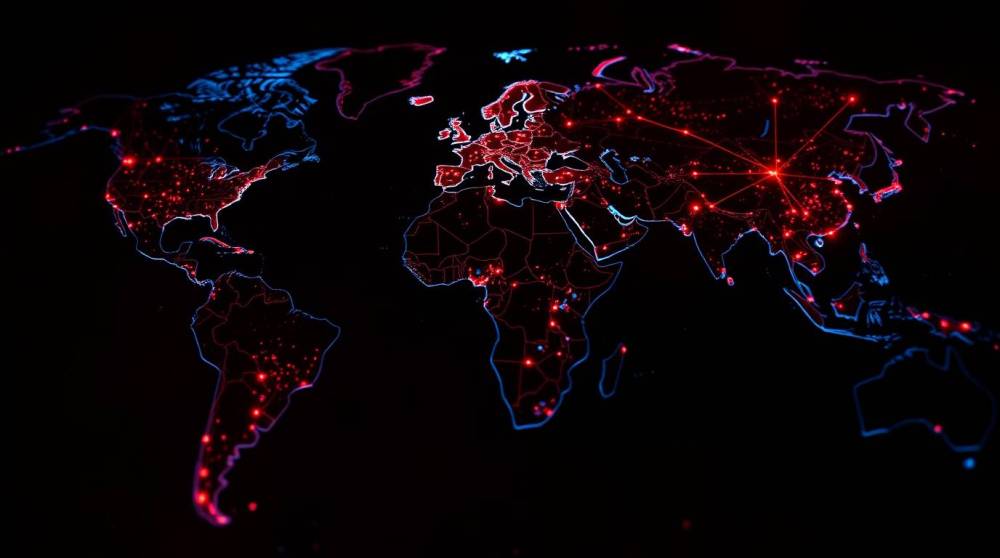
The internet was never designed with borders in mind. It grew fast, connected almost everything, and suddenly we had a global space that didn’t care about geography. But as cyberattacks keep getting louder and more damaging, countries are starting to ask a question we never really thought about before: do we need digital borders the same way we have physical ones?
Some governments say yes and urgently. They believe that if a nation can’t draw a line around its own digital space, then it can’t properly defend itself. In their view, “cyber territory” is simply the next step of national sovereignty. Control the networks, understand the data flow, and stop hostile traffic before it reaches your citizens.
It sounds logical. If someone tries to break into a power plant, a stock exchange, or a government system, shouldn’t the country be able to block or intercept that threat at the “border,” just like customs officers do at airports?
But the idea gets messy very quickly.
Unlike land or airspace, the digital world never sits still. Data jumps from country to country in seconds, often without anyone knowing the exact path it took. A single website might be hosted in five different regions at once. Even your phone’s apps communicate with servers scattered across the globe. So how exactly do you draw a clean border around something that moves constantly?
There’s also the risk of going too far. If digital borders become strict and political, the result could be a fragmented internet, different rules, restricted access, and less freedom to communicate or innovate. Some fear that governments will use the idea of “cyber territory” not for security, but for control.
Still, it’s hard to ignore why this debate is growing. Cyberattacks are no longer just technical problems. They’re political events. They affect diplomacy, businesses, critical services, even national stability.
Maybe the real answer isn’t a hard border at all. Maybe it’s better cooperation, shared threat intelligence, and stronger rules around how critical data is stored and protected. The world is clearly heading toward some form of digital sovereignty; the challenge is finding a model that keeps people safe without tearing the global internet apart.
One thing is certain: the question of digital borders isn’t going away. As cyberspace shapes the future of nations, the way we define “territory” will have to evolve too.