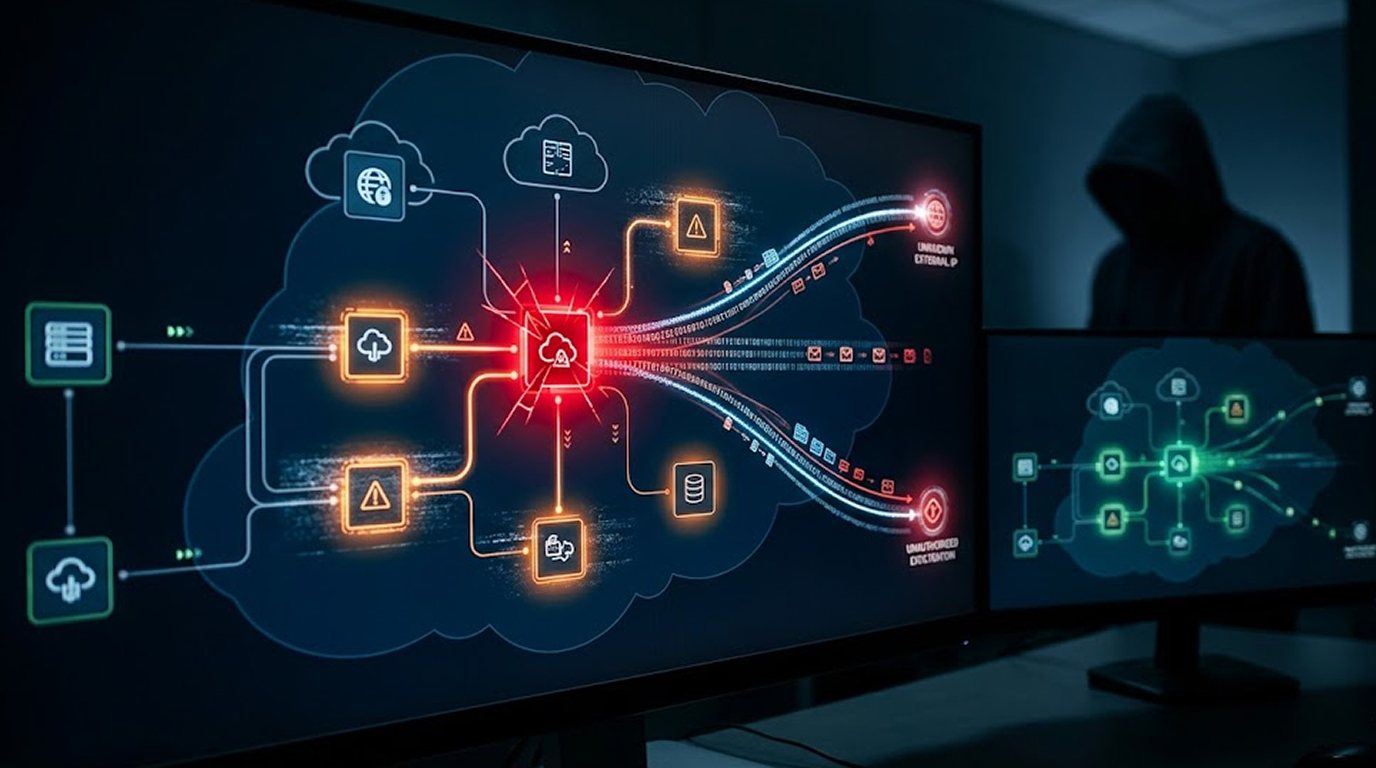
Vercel has revealed they were exposed to a security breach which enabled unauthorised access to company internal systems because of an employee's Google Workspace account being compromised through a third party AI tool known as Context.ai.
This event shows us how much these types of breaches are becoming commonplace and how these types of supply chain attacks grow and spread between businesses through attacks on a single service.
According to Vercel, the attacker used the compromised Context.ai access to take over the employee’s Google Workspace account, gaining entry to some Vercel environments and non-sensitive environment variables.
Vercel emphasized that environment variables marked as “sensitive” are stored encrypted and there is currently no evidence they were accessed. The company described the threat actor as sophisticated, citing their rapid operational pace and detailed knowledge of Vercel’s systems.
What Happened in the Vercel Security Breach
The breach originated from Context.ai, where an employee was infected with the Lumma Stealer malware in February 2026. This stealer harvested Google Workspace credentials along with keys for Supabase, Datadog, and Authkit.
The compromised “support@context.ai” account was then used to escalate privileges. Because the Vercel employee had granted “Allow All” permissions when signing up for Context.ai’s AI Office Suite, the attacker was able to pivot into Vercel’s internal Google Workspace.
Vercel has notified a “limited subset” of customers whose credentials may have been exposed and is urging them to rotate their credentials immediately. The company is continuing to investigate the full scope of the breach with the help of Mandiant and law enforcement.
Context.ai's Response And Role
In March 2026, Context.ai confirmed it detected and halted unauthorized access to its AWS environment; however, it learned later that compromised OAuth tokens for certain users were used to access Vercel's systems. They have since informed all affected customers, and have also reinforced their security controls.
According to Hudson Rock's analysis, an infected Context.ai employee was actively searching and downloading game exploits (Roblox autofarm scripts), which is a typical delivery method to be infected with Lumma Stealer.
Vercel's Response And Implementation Of New Features
According to Vercel CEO Guerrero Rauch, they've deployed extensive protective measures as well as analyzing supply chain for tools like Next.js and Turbopack to ensure security.
As part of their response, they've introduced new dashboard functionalities (feature additions).
1. An overview page for environment variables.
2. An improved UI for creating/managing sensitive environment variables.
Recommendations for Vercel Users
Vercel users should take these measures right away:
1. Change all credentials and environment variables (particularly any that aren't labeled sensitive).
2. Check activity logs for any suspicious activity.
3. Make sure Deployment Protection is set to at least "Standard."
4. If using Deployment Protection tokens, rotate those tokens.
5. Review recent deployments to see if there are any unforeseen changes.
Lessons from the Vercel Security Breach
Vercel’s breach brought to light how damaging a supply chain attack can be. With so many integrations and third-party tool usage, organizations should practice strict control of their OAuth permissions; A single vulnerability in a third-party tool can have catastrophic consequences when there are broad permissions associated with that tool.
Organizations are relying even more heavily on AI and productivity applications; thus, enforcing the Principle of Least Privilege as well as continuously auditing all integrations will be critical to security.
Be sure to treat all third-party services with the same level of scrutiny you give to your own infrastructure to keep them secure.
FAQ Section
Q1: What's the cause of the Vercel risk breach?
The Vercel incident was the result of a compromising employee from Context.ai who had their sensitive Google Workspace credentials stolen via the Lumma Stealer malware.
Q2: What are the implications for sensitive environment variables?
There is currently no indication that encrypted environment variables were accessed in this breach, however it is possible that unencrypted, or non-sensitive, environment variables could have been exposed.
Q3: What immediate actions should customers of Vercel take now?
Immediately rotate credentials, confirm logs for changes, and enable Deployment Protection.
Q4: Is Vercel the only affected company in the Context.ai case?
Vercel has notified all of the other affected companies of their involvement in this incident; however, it is unclear how many additional companies will be impacted, if any at all.
Q5: What can organizations do to secure their supply chain from attack?
Limit OAuth access to only to what is absolutely needed, perform routine audits of third-party integrations, implement strong endpoint protection against stealer attacks such as those from Lumma.