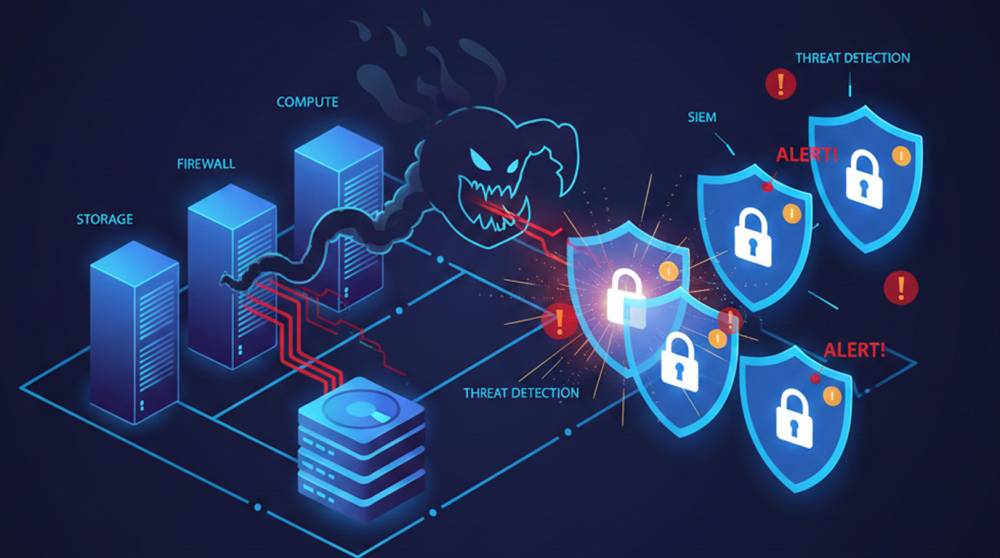
Most organizations have the misconception that after they migrate their workloads to a cloud service provider, their workloads will be secure. Unfortunately, this is not the case. While cloud service providers do an exceptional job of protecting their infrastructure, protecting your data, applications and workload is the responsibility of the organization that uses the cloud service provider. Malware continues to be a threat and may penetrate your organization’s cloud environment if it is not being properly protected.
To understand how malware gets into cloud environments, consider how you would protect a storage warehouse if you were renting storage space. Although the warehouse locks the doors, if you leave the fitting key underneath the carpet, anyone can gain access.
Ways malware infiltrates cloud environments:
1. Phishing or gaining access to compromised credentials: A malicious actor can obtain either the administrator or developer account(s) and use them to deploy malware.
2. Utilizing infected container images: Unverified Docker images downloaded from the internet may contain malicious code.
3. Misconfigured cloud storage solutions: Malware delivery scripts are written to target cloud storage methods that are misconfigured such as S3 buckets or Blob storage.
4. Third-party applications and dependencies: Oftentimes, cloud-based applications are dependent on third-party libraries, many of which have the potential to be compromised.
Kinds of malware you may encounter:
1. Ransomware in the cloud
Attackers encrypt files or databases that are hosted in a cloud environment and demand payment.
2. Cryptojacking
Malware that mines cryptocurrencies by using the processing power of cloud-based CPU or GPU resources; causing increased expense.
3. Data exfiltration malware
The source of your sensitive data, whether it is located in database storage, object storage or application logs; is at risk of being stolen.
4. Persistence Scripts and Back Doors
Malware that is installed in the Cloud VM or Container ensures that access to the user's cloud resources is maintained indefinitely.
Warning Signs
1. An unusual increase in the activity for the user's cloud resources (CPU, memory, or Network Traffic).
2. Login activity that originates from an unusual location or IP addresses.
3. The user sees new files and/or Containers that have no known origin.
4. Users receive alerts from Cloud Security tools or Anomaly Detection software.
How can Companies secure their Cloud Environment?
1) Enforce Strong Access Controls
MFA should be enforced; credentials should be updated and rotated on a regular basis; only the least privilege necessary should be used to access Cloud Resources.
2) Scan Container Images
Users should only use verified Container Images and that all Container Images should be scanned for vulnerabilities before being deployed.
3) Monitor Cloud Activity
Centralized logging and SIEM integrations will allow the user to detect anomalous activity quickly.
4) Encrypt Data At Rest and In Transit
If malware can gain access to your Cloud system, then Encryption will limit the usefulness of that malware on the user's Cloud Resources.
5) Cloud-native Backup
Methods Will Help You Recover from Accidental Deletions and Idiotic Behaviors/Actions Caused by Ransomware Attacks
6) Educating Developers and Administrators on Security Best Practices in the Cloud
Malware Deliberately Infecting Your Business Through the Internet Is Not Much Different than the Same Type of Malware Infecting Your Servers at Your Location. The Difference Is, in the Cloud, One Compromised Username and Password, One Misconfigured Bucket or One Container That Has Not Been Verified, Can Result in Data Being Stolen, Service Being Down, And A Lot of Unexpected Expenses.
Your Company’s Security for Cloud Environments Is Shared Between the Company and the Cloud Provider. Your Company Can Minimize the Risk of Malware by Implementing Strong Access Control, Monitoring Your Resources, and Educating Employees About Best Practices for Using the Cloud.