Ethical hacking is not abstract theory.
It is hands-on work with real applications, real traffic, and real mistakes.
The goal is not to show off tools or code.
It is to prove how an application can be misused in ways its designers did not expect.
Below is how this happens in practice, using common tools and simple examples.
1. Intercepting and modifying normal traffic
The first practical step is visibility.
Ethical hackers rarely start with scanners.
They start by watching how the application talks to the server.
Common tools
1. Burp Suite
2. OWASP ZAP
3. Browser developer tools
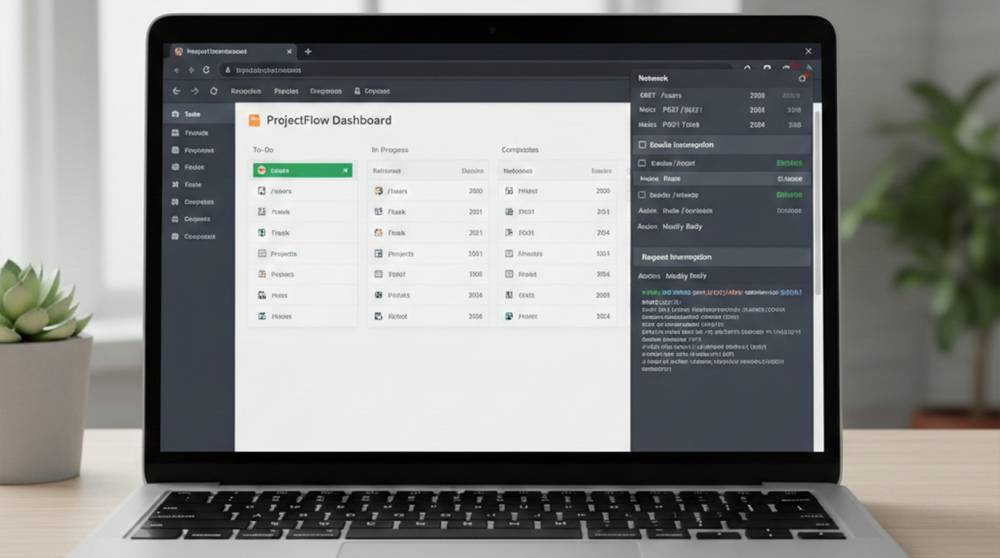
These tools sit between the browser and the server and show every request.
What is tested
1. Parameters sent by the browser
2. Hidden fields
3. IDs passed in URLs or JSON
Practical example
A user views their invoice:
GET /invoice?id=10231
The hacker changes it to:
GET /invoice?id=10232
If another customer’s invoice appears, access control is missing.
No exploit.
No malware.
Just trust in the wrong place.
2. Testing authorization, not authentication
Many apps protect login well but forget what happens after.
Ethical hackers test what logged-in users can do, not just whether they can log in.
Tooling
1. Burp Repeater
2. curl
3. Postman
Practical example
A normal user submits a request:
POST /api/user/update
{
"user_id": 551,
"role": "user"
}
The request is modified:
POST /api/user/update
{
"user_id": 551,
"role": "admin"
}
If the server accepts it, the issue is not coding skill.
It is missing authorization logic.
3. Manipulating form input
Forms are one of the oldest and most reliable attack surfaces.
Ethical hackers test what happens when input is unexpected, not malicious-looking.
Common tools
1. Burp Intruder
2. ffuf
3. Browser dev tools
Practical example
A search field submits:
GET /search?q=laptop
The input is changed to:
GET /search?q=' OR '1'='1
If the application returns all records or errors, input handling is unsafe.
Even when no data is leaked, error behavior often reveals internal logic.
4. Breaking password reset flows
Password reset logic is often more fragile than login.
Ethical hackers examine every step.
What is tested
1. Token reuse
2. Token expiration
3. Email ownership validation
Practical example
A reset link looks like:
https://app.example.com/reset?token=abc123
After the password is changed, the same link is reused.
If it still works, account takeover is possible without credentials.
This happens more often than most teams expect.
5. Abusing APIs directly
Modern apps rely heavily on APIs.
Ethical hackers do not trust the frontend to enforce rules.
Tools
1. Postman
2. curl
3. Burp Suite
4. mitmproxy
Practical example
The frontend requests:
GET /api/orders?limit=10
The hacker sends:
GET /api/orders?limit=10000
If the API responds with all orders, data exposure is limited only by bandwidth.
The UI was restrictive.
The API was not.
6. File upload testing
File uploads are not about viruses.
They are about assumptions.
Tools
1. Burp Suite
2. Manual file crafting
Practical example
An app allows profile picture uploads.
Expected:
photo.jpg
Tested:
photo.php.jpg
Or a valid image with embedded script content.
If the file is stored and executed incorrectly, the issue becomes much larger than a profile picture.
7. Session handling and logout behavior
Sessions are trusted quietly and often forgotten.
Ethical hackers test what happens when sessions should die.
Practical example
1. Log in
2. Capture session cookie
3. Log out
4. Reuse cookie in a new request
If the session still works, logout is cosmetic.
This is frequently found during real assessments.
8. Automation for scale, not discovery
Automation is used after manual confirmation.
Common tools
1. Nuclei (template-based checks)
2. ffuf (endpoint discovery)
3. custom scripts
Example
Using ffuf to find hidden endpoints:
ffuf -u https://app.example.com/FUZZ -w endpoints.txt
The goal is not speed.
It is coverage.
What ethical hackers are proving
Every practical test answers one question:
“What does the application trust that it should not?”
Tools and code are just a way to ask that question consistently.
Most serious issues come from:
1. Missing checks
2. Assumptions about user behavior
3. Features interacting in unexpected ways
Not from advanced exploitation.
What to take away
Ethical hacking is practical,and repetitive.
It breaks web apps by:
1. Observing normal behavior
2. Changing small details
3. Repeating actions at scale
The value is not in the tools or the code.
It is in exposing where trust was assumed instead of enforced.
That is where real risk lives.