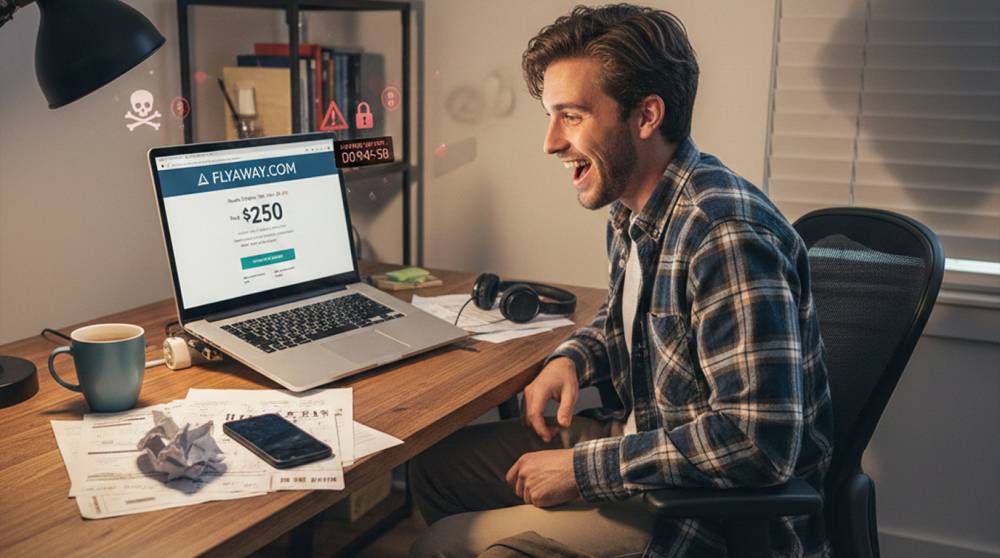
Okay, so here’s the deal. You’re looking for flights or hotels online. You type in a city, a date, and boom a “great deal” pops up. It looks real. Like, really real. Photos, logos, countdown timers, even reviews. And people just click.
Travel is expensive, right? And these sites are built to make you hurry. See a cheap flight and your brain’s like, “Yes! Book it!” That’s exactly what the scammers want.
Why They Work
1. Cheap prices grab attention. $200 off? People click.
2. They look professional. Fonts, colors, layout—copied from real sites.
3. Ads help them show up first on Google.
4. You’re in a rush. Holidays, weekends, last-minute trips… no one thinks twice.
5. URLs look almost right. One letter off, or extra dot. Hard to notice.
How the Scam Usually Goes
You pick a flight. You pay. You get a confirmation. Then… nothing exists. Hotel gone. Flight not real. Money gone. And sometimes personal info is stolen too.
How to Stay Safe
1. Pause before booking. Seriously. Take a breath.
2. Check the URL carefully. Weird spelling? Don’t touch it.
3. If it’s too cheap, question it.
4. Don’t blindly trust ads.
5. Look for reviews elsewhere. Not just on the site.
6. Use a credit card. More protection if things go wrong.
Even experienced travelers can get caught. These sites aren’t just scams, they’re traps to steal money or info. Awareness and double-checking is the only real defense.