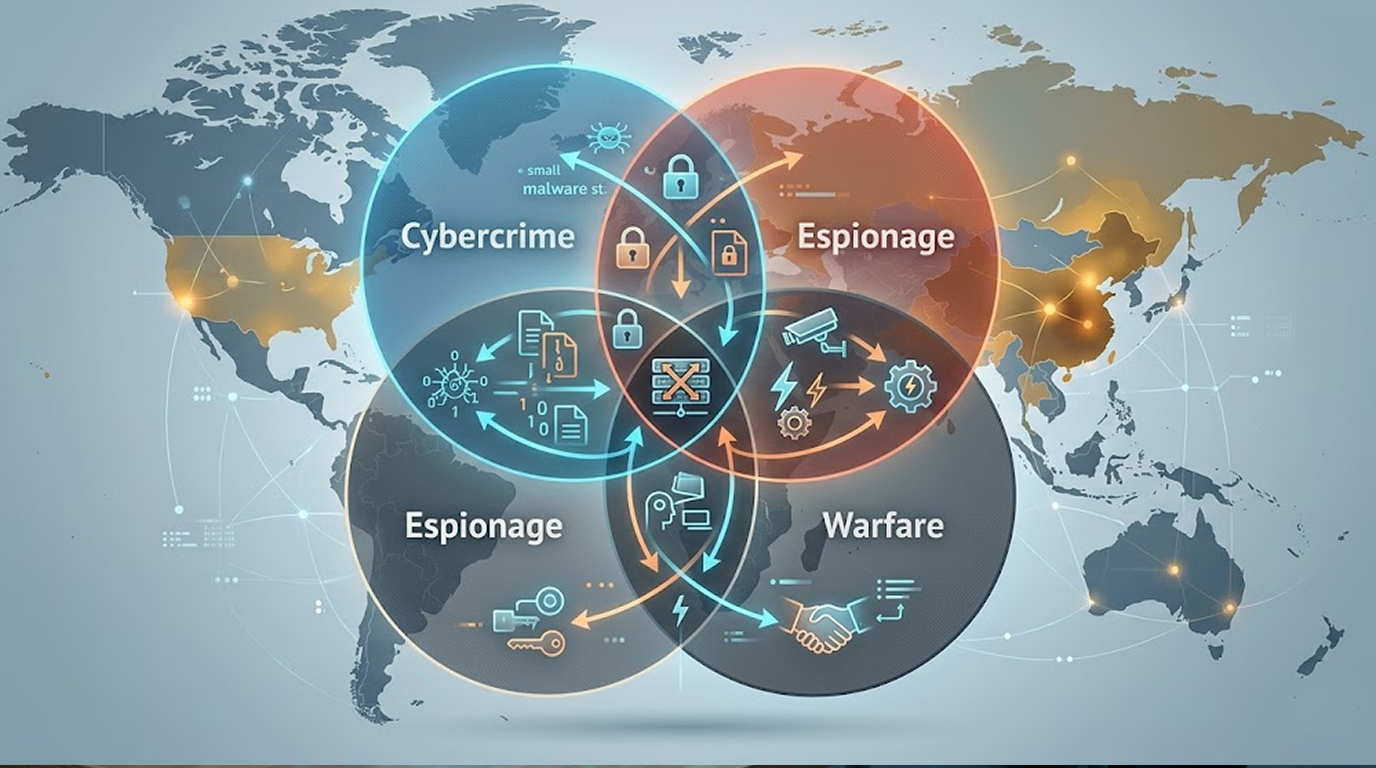
In 2026, the borders which had once separated different areas of cybercrime from government sponsored spying and that of cyber warfare is becoming less distinct and more entwined than ever before. No longer are criminal groups, state-sponsored actors and military actors primarily focused on separate areas of cybercrime.
Instead, many of the same tools, methods, and techniques from one category of cyber activity are being used by actors across the board, which is causing for significant complications and risks for all governments, businesses, and individuals alike.
Convergence Trend
There are three highly influential factors contributing to this blurring effect on the lines between cyber-crime, state-sponsored espionage, and cyberwarfare:
1. Shared Tools and Infrastructure, Use of the Same Malware Families, Exploit Kits, and Command and Control Frameworks by both criminal actors as well as state actors.
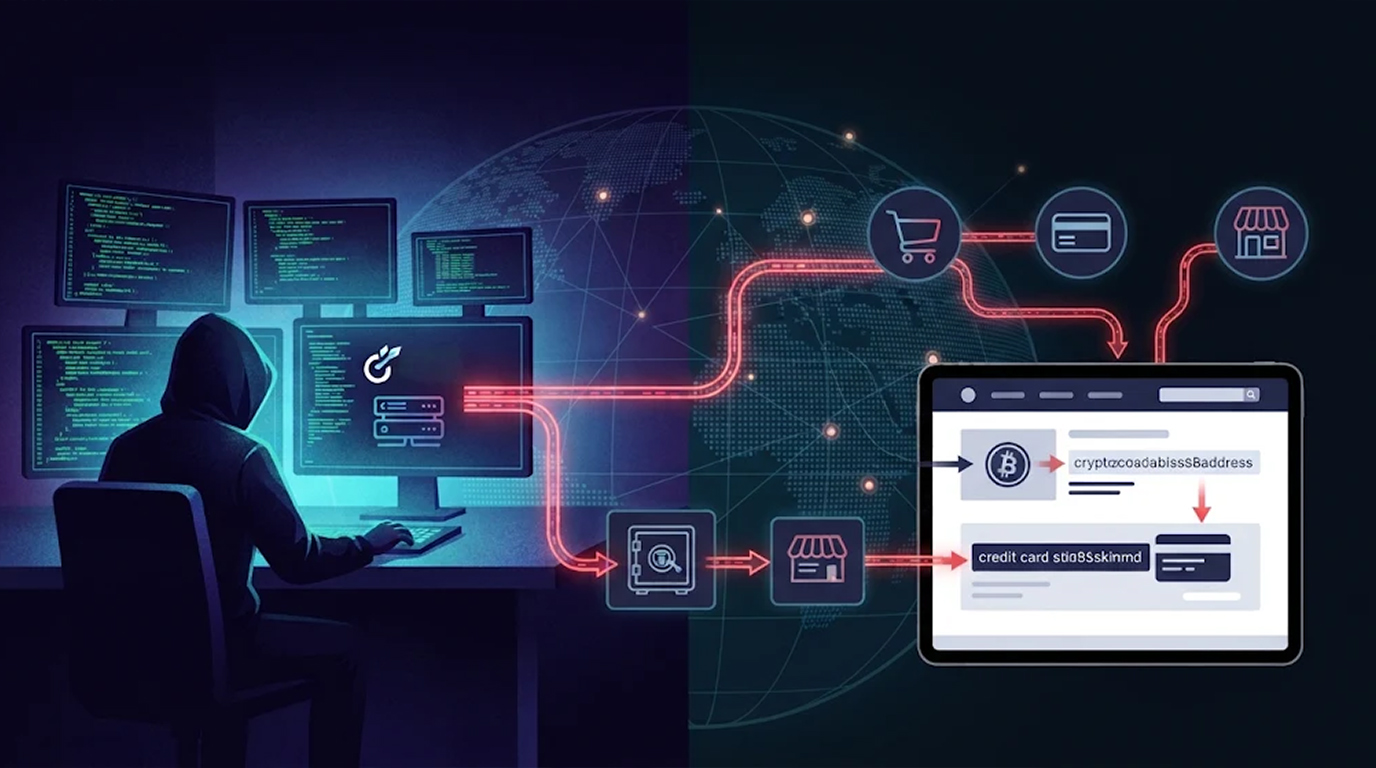
For example, a ransomware group might use the same initial access broker as a foreign intelligence service. Stolen credentials from a criminal operation can later be leveraged for espionage. The infrastructure (bulletproof hosting, proxy networks, C2 servers) is often shared or rented across categories.
2. Hybrid Actor Types and "Useful Idiots" As a result of their actions, some criminal organizations function as "useful idiots" supporting the interests of national intelligence agencies either knowingly or unknowingly.
Other groups are actively working with governments and authorities by carrying out at least some operations against foreign targets, providing plausible deniability but accomplishing strategic objectives.
3. Economics and Geopolitics Convergence Cyber operational activities are increasingly serving many purposes at once.
Examples include:
a. The theft of intellectual property (espionage) and the disruption of other competitive operations (economic warfare)
b. The execution of ransomware type criminal attacks (for profit) that also serve to degrade the operational capacity of critical infrastructure (hybrid warfare)
c. The use of criminal botnets to launch DDoS-type attacks on government websites or systems, especially during geopolitical tensions or crises
Real-World Examples in 2026
1. Ransomware groups with state ties Several Eastern European ransomware operations have been observed providing initial access or stolen data to state-linked actors. The financial motive (ransom) funds the group, while the intelligence value serves state interests.
2. Supply chain attacks can serve two purposes At the same time, a popular software library could be compromised to permit mass data theft (espionage) and allow for disruption (warfare). A single backdoor may allow both criminals to make money and state actors to obtain strategic advantage;
3. Hacktivist actions in conflict Hacktivist groups identified as “independent” can coordinate with, or receive support from state actors. Disruptive cyberattacks (e.g., DDoS, disruptions / defacements / leaking information) serve to achieve the combined goals of propaganda and psychological warfare while remaining some distance from laying blame upon any of the state actors involved.
4. Financial cybercrime with strategic impact Large-scale SWIFT or banking system intrusions that look like pure criminal activity can also serve to destabilize economies or gather intelligence on financial flows.
Why the Blurring Matters
This convergence makes attribution harder, response more complicated, and deterrence less effective. When a single operation can generate profit for criminals while advancing state objectives, it becomes difficult to separate law enforcement issues from national security concerns.
It also raises the stakes for companies and individuals. A “simple” ransomware incident might actually be part of a larger intelligence operation. It is possible that the data breach, which has been characterized as the work of a developer, is the initial step in an ongoing, broader strategic plan that will continue to have an impact on our society.
Current Events
What are we currently experiencing in 2026?
1. State actors and criminal syndicates are increasingly collaborating on projects that may be structured or transactional.
2. More criminals are utilizing proxy and intermediary resources in order to maintain deniability.
3. There are more cybercrimes now that have been structured to further the stakeholders’ financial, intelligence, and disruption objectives at the same time.
4. Due to the diminishing line between criminal activity and war, it is increasingly difficult for governments to respond in a proportionate manner.
Although there is still a distinction between these types of crimes, the distinction is becoming less and less clear.
What Does This Mean for Organizations?
Businesses and individuals should consider that any major cyber incident is subject to many factors such as crime, espionage and hybrid warfare. Therefore, it will be helpful for both businesses and individuals to utilize more resilient systems and develop rapid identification processes for responding to any significant cyber incident no matter what type it may be (cybercrime, espionage or warfare) by being able to respond effectively to multiple potential threats.
In conclusion, although there continues to be a distinct boundary of understanding between areas of criminality such as cybercrime, espionage and warfare, it is becoming increasingly difficult to easily build a wall between each of these areas of criminal activity. Understanding and preparing for that reality is now essential.