Threat hunters have uncovered fresh activity linked to the Iranian threat actor known as Infy, also referred to as Prince of Persia, nearly five years after the group last drew attention for operations targeting Sweden, the Netherlands, and Turkey.
According to SafeBreach, the group never actually disappeared. Instead, it continued operating quietly, refining its tooling and infrastructure. “The scale of Prince of Persia’s activity is more significant than we originally anticipated,” said Tomer Bar, vice president of security research at SafeBreach. “This threat group is still active, relevant, and dangerous.”
Infy is still one of the oldest running cyber-espionage groups with ongoing activity. Finding evidence of Infy’s activity dates back to December 2004 based on public reporting, indicating that Infy is one of the earliest known state-aligned groups in the world. Infy has not received as much attention as some of the other Iranian cyber-espionage groups (Charming Kitten, MuddyWater, and OilRig).
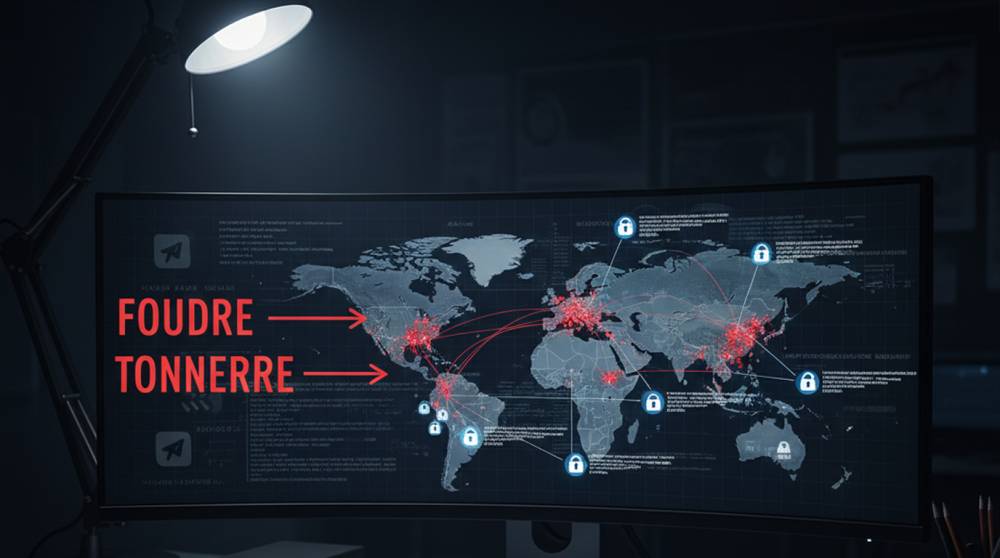
Historically, Infy’s main malware families have been Foudre (a downloader/recon tool) and Tonnerre (2nd stage implant extracting information from the targeted high-value systems). The Foudre malware family could only have been delivered by a phishing email and it also conducted an initial victim profiling to lead to the deployment of Tonnerre.
Current Activity and Tools
SafeBreach has uncovered active campaigns targeting users within Iran, Iraq, Turkey, India, Canada, and multiple European countries. The most notable updates to the malware families are seen in Foudre v34, and multiple variants of Tonnerre (v12–18, and v50). The most recently available variant of Tonnerre was identified during September 2025.The infection chain has also evolved. Earlier campaigns relied on malicious Excel documents containing macros. More recent samples embed executables directly inside the documents, which are then used to install Foudre without relying on macros at all.
One of the more distinctive aspects of Infy’s tradecraft is its use of a domain generation algorithm (DGA) to harden its command-and-control infrastructure. On top of that, both Foudre and Tonnerre implement an additional validation step to ensure they are communicating with legitimate attacker-controlled servers.
Every day, a Signature File that is encrypted with RSA will be saved on the C2 server. An embedded Public Key within the malware permits verification of that Signature File. The Signature File verification is then compared to a local database of signature files that have been previously validated. When the Signature File does not match, there will not be further communication between the malware and the C2 server. This provides an additional hurdle for sinkholing and taking over their infrastructure.
SafeBreach has also identified that there is a structured layout for the C2's folders such as:
1. A 'key' folder for domain validation.
2. A 'communication logs' folder as well as a 'stolen data' folder.
3. A 'download' folder which is likely to contain newer versions of the malware.
C2 via Telegram
The new Tonnerre C2 (Command and Control) variant uses Telegram for the first time as part of the malware's C2 workflow. Specifically, the malware will now download configuration data that points to a Telegram group called "سرافراز" or "Proudly" in Persian. The Telegram group contains a bot that is likely used by actors in the campaign to execute commands and handle collected data. In addition, it also appears that a user account is used to communicate with this group, which might be operated by the actors.
The Telegram information is stored in a specific location with the file name "tga.adr" in a location associated with C2. This file will only be available to a specific list of victim GUIDs, which helps explain the selective targeting of this group.
Use of Legacy Tools Continues
SafeBreach also uncovered remnants from earlier Infy campaigns (2017–2020) that are still active, including:
1. Foudre variant being used as Amaq News Finder
2. MaxPinner trojan for spying on Telegram communications
3. Deep Freeze variant used to deploy Foudre
4. An Unknown Malware Family tracked by the name Rugissement
While Prince of Persia has not received any media attention since 2022, they are still continuing their active development and use of the techniques from 2020. In addition to their focus on a limited number of campaigns and maintaining secure infrastructure, they seem to have reduced their media exposure.
Source: The Hacker News