Cybersecurity researchers have observed a surge in phishing attacks leveraging spoofed domains and misconfigured routing to impersonate internal emails, according to a Microsoft Threat Intelligence report. The campaigns often employ phishing-as-a-service (PhaaS) platforms, most notably Tycoon 2FA, targeting a variety of organizations across industries.
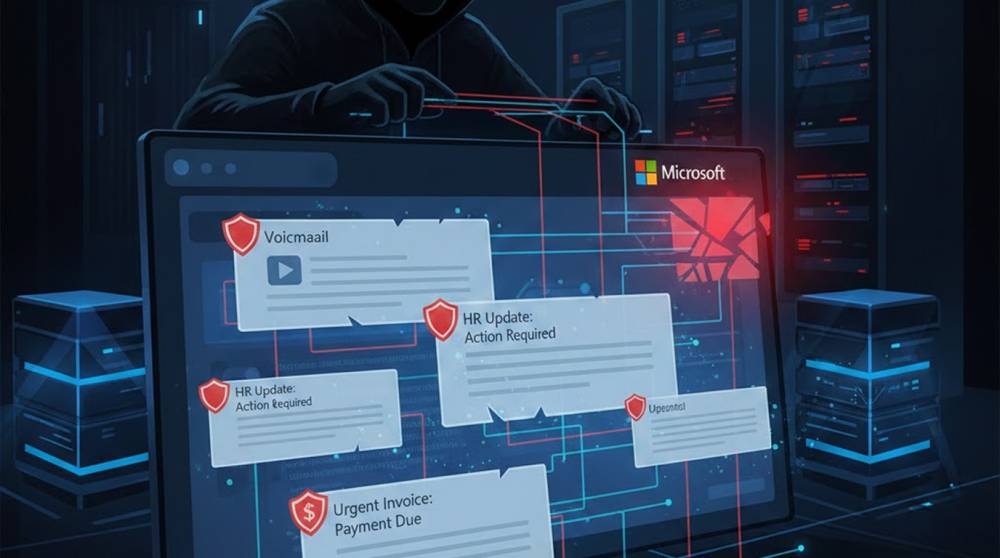
"Threat actors have leveraged this vector to deliver messages themed around voicemails, shared documents, HR notices, password resets, and other common enterprise notifications, leading to credential phishing," Microsoft said.
Email Routing Attack Overview
Attackers use complex email routing scenarios when they create phishing emails that look like they come from your organization. They take advantage of your organization’s MX records that direct incoming emails through different servers (like on-premise servers or third-party services) before they reach Microsoft 365.
If DMARC/SFP spoof protections aren’t configured and enforced correctly, attackers can spoof the email sending domain of your organization and send emails that look legitimate.
Methods of Attack
The attackers have four main methods in pursuing this type of attack:
1. PhaaS (Phishing as a Service) kits - PhaaS has developed a sophisticated set of phishing tools that make it easy for fraudsters to launch phishing campaigns even when they don’t have any technical knowledge of creating phishing schemes.
2. Adversary in the Middle (AiTM) Phishing - AiTM is a technique that allows the attacker to bypass a user’s multifactor authentication to steal user credentials.
3. Financial scams - Attackers use fake invoices, IRS W-9 forms, and falsified bank letters to try and convince employees into wiring money to the attacker.
4. Internal Email Impersonation - Attackers collect email headers from an email message sent to the organization and then send another email to the same recipient address, using the same "To" and "From" lines as the first email.
According to Microsoft, they blocked more than 13 million phishing emails connected to Tycoon 2FA in October 2025.
How to Mitigate Risk
Organizations can reduce risk by taking these four mitigating steps:
1. Configuring DMARC reject policies and SPF hard fail rules.
2. Configuring spam filter, archiving tool, and third-party connector.
Source: The Hacker News