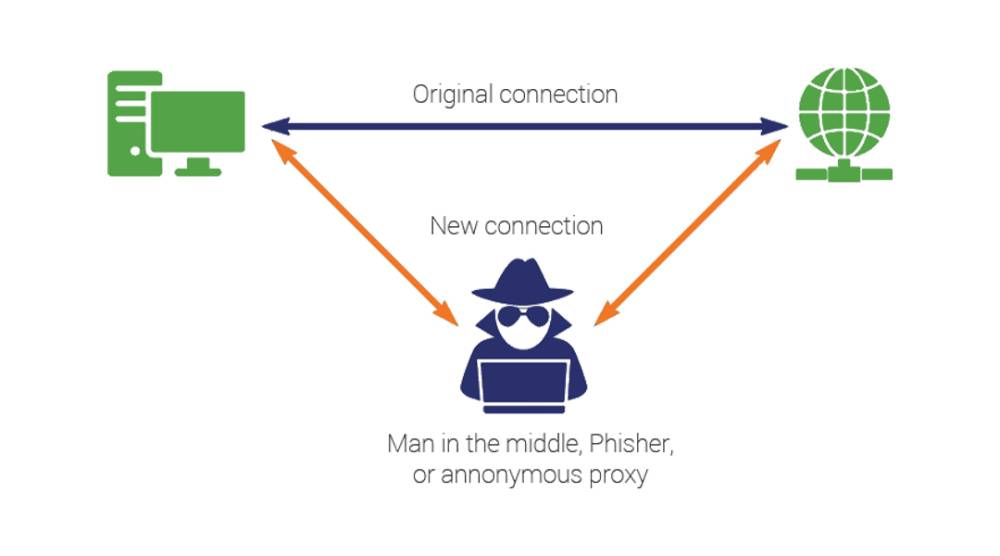
Man-in-the-Middle (MitM) attacks are a dangerous type of cyberattack where an attacker secretly intercepts and possibly alters the communication between two parties. These attacks exploit vulnerabilities in network security to steal sensitive information, such as login credentials, financial data, or personal messages, often without either party realizing that their communication has been compromised.
In this article, we'll explore how MitM attacks work, the various types of these attacks, and the best practices to defend against them.
What Is a Man-in-the-Middle Attack?
A Man-in-the-Middle attack occurs when a cybercriminal places themselves between two communicating entities (usually a user and a website or service) to intercept the information passing between them. The attacker can passively eavesdrop or actively alter the communication, gaining access to confidential data or injecting malicious content.
For example, when you log into your online bank account, your browser communicates with the bank’s server. In a MitM attack, a hacker intercepts this communication and can potentially steal your login details, hijack your session, or even manipulate the data before it reaches its destination.
Types of MitM Attacks
MitM attacks can take various forms, depending on how the attacker intercepts the communication. Some common types include:
- Wi-Fi Eavesdropping:
Public Wi-Fi networks are common targets for MitM attacks. In this scenario, the attacker sets up an unsecured Wi-Fi network or compromises an existing one, and users unknowingly connect to it. Once connected, the attacker can monitor or manipulate all the data transmitted between the user and the websites they visit. - Session Hijacking:
Session hijacking occurs when an attacker takes over a legitimate user’s session by stealing session cookies. These cookies contain sensitive data that authenticates the user on the server. Once the attacker obtains the cookie, they can impersonate the user and gain access to their account. - HTTPS Spoofing:
In this attack, the attacker impersonates a legitimate website by using a fake HTTPS certificate. When users visit the fake website, they believe they are on a secure, trusted site, but all their communication is being routed through the attacker, who can steal their personal data. - DNS Spoofing:
DNS spoofing involves manipulating the Domain Name System (DNS) to redirect a user’s traffic from a legitimate website to a malicious one. When users think they are visiting a trusted website (e.g., their bank), they are actually visiting the attacker’s site, which can steal their login information or other sensitive data. - SSL Stripping:
SSL stripping downgrades the connection between the user and the website from HTTPS (secure) to HTTP (insecure). The attacker intercepts the connection and strips away the encryption, leaving the communication exposed to eavesdropping or manipulation.
How MitM Attacks Work
The general process of a MitM attack follows these steps:
- Interception:
The attacker intercepts the communication between the two parties, usually by exploiting insecure connections (e.g., public Wi-Fi or compromised routers). - Decryption or Tampering:
Depending on the type of attack, the hacker either listens in on the communication or manipulates the data being transmitted. They can steal sensitive information such as usernames, passwords, or financial data. - Re-transmission:
The attacker sends the altered or unaltered communication back to the intended recipient. In most cases, neither party is aware that their conversation has been intercepted.
The Dangers of MitM Attacks
The consequences of a successful MitM attack can be severe, leading to financial losses, identity theft, or unauthorized access to private accounts. Here are some of the most significant risks:
- Data Theft: Attackers can steal personal information, including passwords, financial details, and personal messages, leading to identity theft or financial fraud.
- Account Hijacking: By intercepting login credentials, attackers can gain control over user accounts, such as email, banking, or social media profiles.
- Loss of Privacy: Sensitive communications, such as confidential emails or medical information, can be exposed to unauthorized third parties.
- Malware Injection: In active MitM attacks, the attacker can alter the communication to inject malicious code into websites or emails, infecting the user's system with malware.
How to Protect Yourself from MitM Attacks
While MitM attacks can be sophisticated, there are several steps users and organizations can take to protect themselves:
- Use Encryption:
Encryption is one of the most effective defenses against MitM attacks. Websites and applications should use HTTPS for secure communication, ensuring that data transmitted between users and the server is encrypted. - Verify Website Certificates:
Always check the validity of a website’s SSL certificate, especially when accessing sensitive accounts like online banking. A green padlock in the browser’s address bar indicates that the site is using secure encryption. - Avoid Public Wi-Fi for Sensitive Transactions:
Public Wi-Fi networks are hotspots for MitM attacks. Avoid conducting sensitive transactions, such as banking or shopping, when connected to unsecured or unfamiliar networks. - Enable Two-Factor Authentication (2FA):
Adding an extra layer of security, such as 2FA, can prevent attackers from gaining access to your accounts, even if they steal your credentials. 2FA typically requires both a password and a verification code sent to your mobile device. - Use VPNs:
A Virtual Private Network (VPN) encrypts all internet traffic between your device and the VPN server, making it more difficult for attackers to intercept your communication. - Keep Software Updated:
Regularly updating your operating system, browsers, and other software ensures that you are protected against the latest security vulnerabilities. - Monitor Account Activity:
Regularly check your bank and other online accounts for any unauthorized activity, and report suspicious behavior immediately.
Man-in-the-Middle attacks pose a serious threat to both individuals and organizations, as attackers can intercept and manipulate sensitive communications. Understanding how these attacks work and implementing strong security measures—such as encryption, using VPNs, and practicing safe browsing habits—are essential to defending against these types of cyber threats. By staying vigilant and adopting best practices, you can greatly reduce the risk of falling victim to MitM attacks.