If you set up a Keplr crypto wallet using your Google or Apple account, you need to read this carefully.
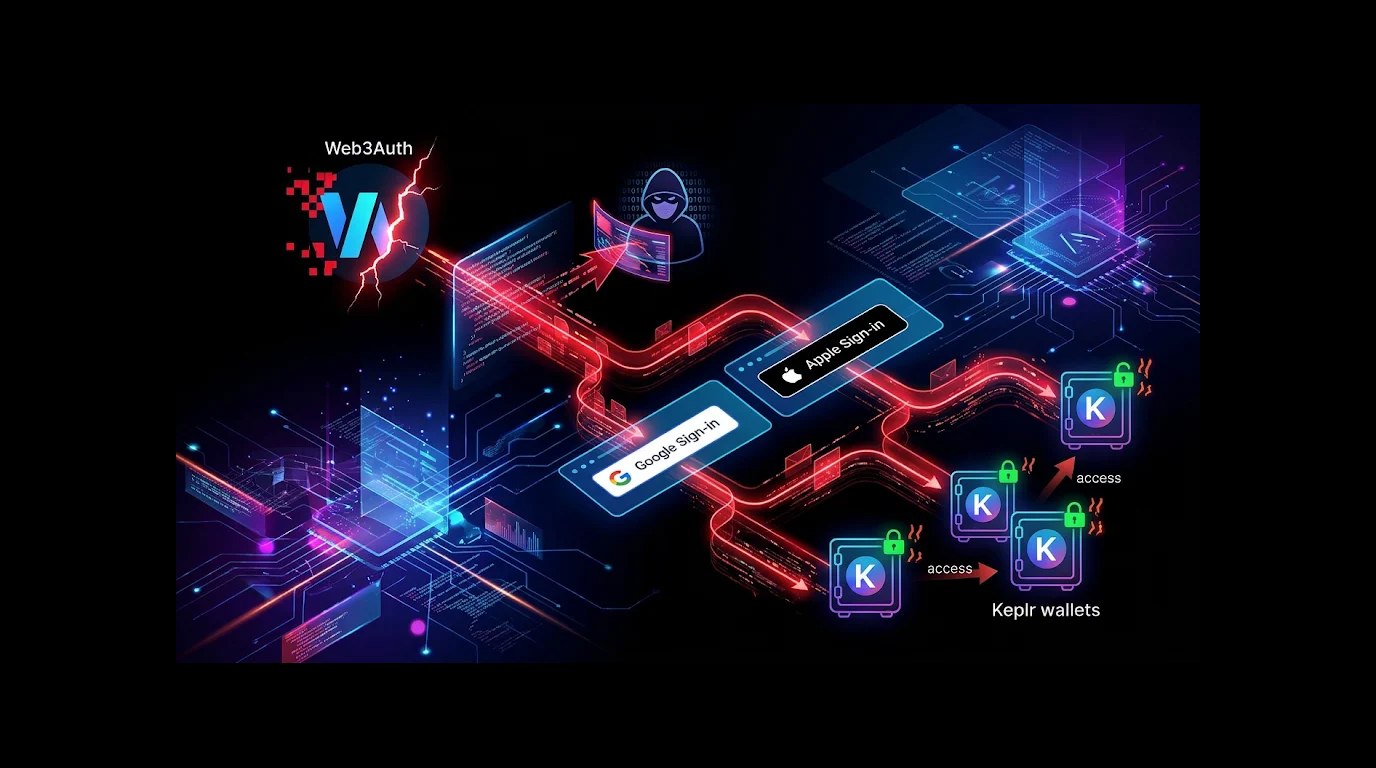
An attacker reached some of those wallets through a security flaw at Web3Auth, the company that runs the social login feature for Keplr. Both companies confirmed the incident late last week.
Keplr went further than Web3Auth's statement, describing what happened as a "private key breach" for some users who signed in with Google or Apple. A private key is the secret that approves payments. Whoever holds it can move the money.
The Confusing Part: Some Empty Wallets Were Rescued, Not Drained
Web3Auth says it used the attacker's own access route to empty at-risk wallets before the attacker could get to them.
It moved those funds, with help from Keplr, into recovery wallets for safekeeping.
So if your balance shows zero, that does not automatically mean your money was stolen. It might mean it was rescued.
That distinction is critical, and it is also why the initial reporting was messy. Bitquery, a blockchain data firm, first reported the transfers as theft. It has since issued a corrected analysis treating them as the rescue. It says it cannot verify who controls the recovery wallets.
What Actually Happened
Web3Auth's incident update describes a security issue in its own infrastructure that affected certain wallets it provides inside the Keplr app.
Keplr's version is more direct. The flaw led to a private key breach for some users who signed in with Google or Apple.
Neither company has explained how the flaw worked, when the attacker first used it, or whether the route is now closed.
|
Detail |
Status |
|
Affected wallets |
Keplr accounts created with Google or Apple login |
|
Unaffected wallets |
Recovery phrase (12/24 word) and hardware wallets |
|
Google/Apple sign-in |
Paused by Keplr during investigation |
|
Root cause |
Security flaw at Web3Auth, specifics undisclosed |
|
Confirmed impact |
"Private key breach" for some users, per Keplr |
The Numbers, and Why They Disagree
No dollar figure has come from either company.
Josh Lee, a Keplr co-founder, gave an early estimate in his initial findings. About 20% of Google and Apple login accounts were affected, and only a fraction of those appeared to have been exploited.
GoPlus, a Web3 security company, said in a security alert that at least about $1 million had been stolen. It did not explain how it reached that figure.
Bitquery counted at least $6.01 million moving from more than 44,000 wallets into the recovery wallets by late last week.
The gap between those figures is not a contradiction. It is the difference between "stolen" and "moved." Web3Auth moved funds to protect them. Bitquery's count reflects the movement, not necessarily the theft.
The Timeline Detail That Matters
Bitquery's data shows the first rescue transfer came 21 minutes before Web3Auth's first public notice.
Most of the wallets, 86%, were emptied after Keplr warned users.
Read those two facts together. The defensive action started before the announcement, and the majority of the movement happened after users were told to act. That suggests the rescue operation was running in parallel with the public response, not as a reaction to it.
What Affected Users Should Do
Keplr's guidance for accounts created with Google or Apple login is specific, and the order matters.
- Do not send new funds to the account. It is not safe to receive deposits.
- Do not re-import or recreate the account anywhere. That includes other wallets, other devices, and recovery attempts.
- Move any funds that are not staked or locked to an account that uses a recovery phrase or a hardware wallet.
- Trust updates only from official accounts. Keplr and Web3Auth will not DM you. Ignore any direct message or link offering "recovery."
- Staked and locked assets are taking longer. Keplr is working with Web3Auth on a way for users to check whether their account was affected.
Web3Auth has published a recovery address list, which it says lets users distinguish its own transfers from possibly malicious ones.
It also warned users not to assume that an unfamiliar destination address is linked to the attacker.
The Wider Impact
Web3Auth said the issue affects its services used by some other companies, but Keplr is the only one it has named.
It paused its embedded wallet service, which other apps use to build wallets for their users. Its status page still showed its login service as down as of publication.
Consensys, the company behind MetaMask, bought Web3Auth in June 2025. The acquisition announcement said the deal would let MetaMask users create and recover wallets with social logins.
Web3Auth said its initial investigation found "no evidence that MetaMask users are impacted."
The Structural Problem With Social Login Wallets
Social login wallets trade a familiar convenience for a different security model. Instead of a recovery phrase you control, the key material is derived or held in a way that involves a third party.
That third party becomes part of your trust boundary. If it has a flaw, your wallet has a flaw. The attacker does not need your seed phrase. They need the provider's weakness.
This is not an argument that social login wallets are inherently unsafe. It is an argument that the threat model is different from a hardware wallet, and the failure modes are different too.
FAQ
What is the Keplr wallet breach?
An attacker used a security flaw at Web3Auth, which runs Keplr's Google and Apple sign-in, to reach some wallets created with those login methods. Keplr described it as a private key breach for some users.
Is my Keplr wallet affected?
Only if you created it with Google or Apple sign-in. Wallets made with a recovery phrase or a hardware wallet are not affected, according to Keplr.
My balance is zero. Was my money stolen?
Not necessarily. Web3Auth moved funds from at-risk wallets into recovery wallets to protect them before the attacker could. An empty balance may mean your money was rescued.
How much was stolen?
No official figure has been released. GoPlus estimated at least $1 million stolen. Bitquery counted at least $6.01 million moved into recovery wallets, which includes both stolen and rescued funds.
Can I still use Google or Apple login?
Keplr has paused Google and Apple sign-in while it investigates. It has not said when the feature will return.
What should I do with my funds?
Move anything that is not staked or locked to a wallet with a recovery phrase or a hardware wallet. Do not send new funds to the affected account, and do not re-import it anywhere.
Are staked assets safe?
Keplr says staked and locked assets are taking longer to secure, and it is working with Web3Auth on a way for users to check their status.
Is MetaMask affected?
Web3Auth says its initial investigation found no evidence that MetaMask users are impacted, despite Consensys owning Web3Auth since June 2025.
How do I tell a rescue transfer from a theft?
Web3Auth published a recovery address list. Check destinations against that list before assuming an unfamiliar address is malicious.