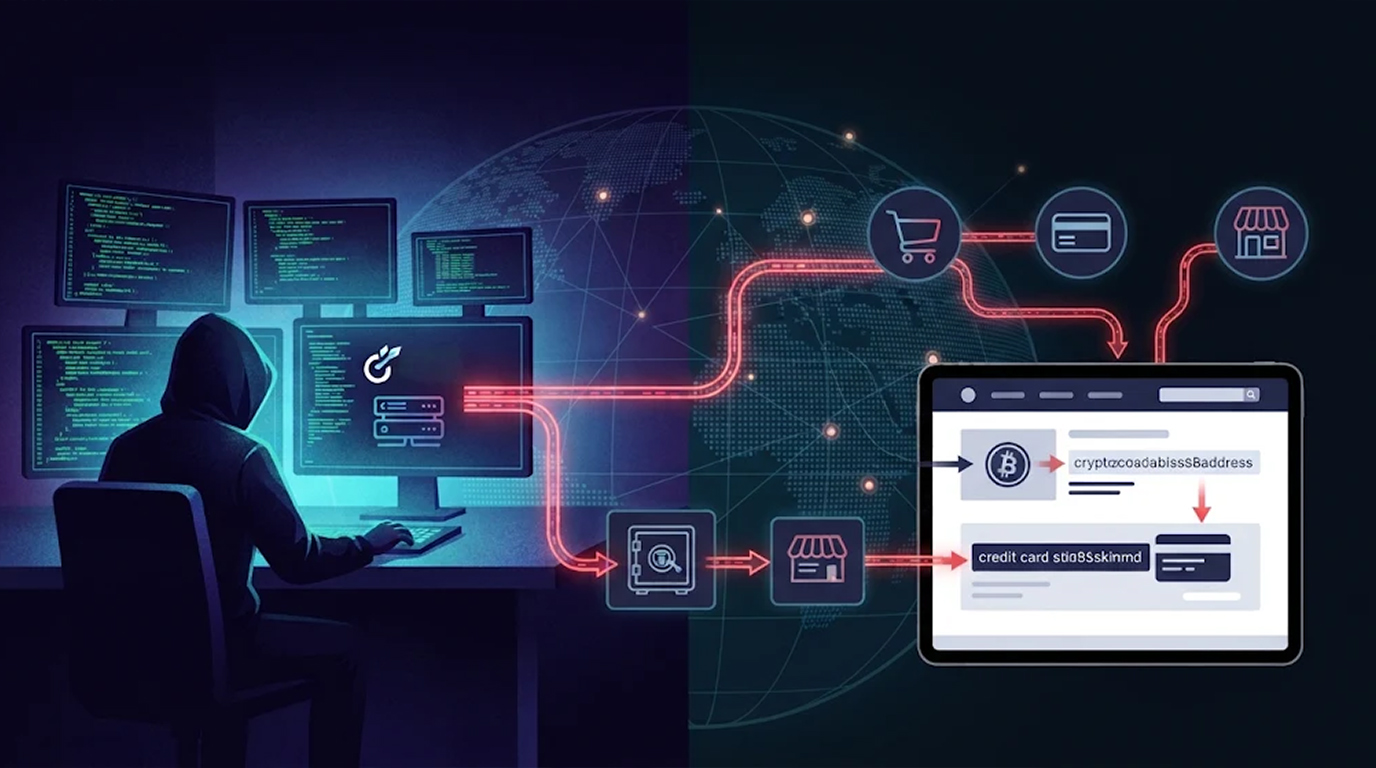

Over the past year, payment card theft has shifted into something more methodical. Attackers aren’t chasing the giant, headline making breaches as often. Instead, they’re collecting card data in smaller chunks, repeatedly, from places that rarely get security attention. It doesn’t look dramatic from the outside, but it gives them a steady flow of fresh card numbers without drawing noise.
Most of these campaigns start in familiar territory: the parts of an online store that sit slightly outside the main development workflow. Old plugins, abandoned analytics integrations, or quick “temporary” features that were never removed. If attackers manage to slip just one modified script into that stack, they get an ongoing copy of card details every time someone checks out. Nothing breaks, nothing slows down, and the business doesn’t feel a thing.
A different pattern is showing up around payment service providers. Not their core systems, those are heavily monitored, but the surrounding infrastructure. Support portals, staging servers, test dashboards left online after a redesign. These side systems sometimes store transaction logs that were meant to be temporary, and those logs often expose more card information than anyone intended. When attackers land there, they scrape everything, even partial numbers, and rebuild what they can.
Mobile apps create another opportunity. Some apps rely on SDKs that developers plug in without fully understanding how they handle sensitive fields. When the SDK communicates directly with backend APIs, especially when it sends data before encryption is applied, attackers intercept or replay the traffic to capture card details. It’s not sophisticated; it’s just exploiting the weaknesses that come from rapid development cycles.
What makes these newer card-harvesting operations frustrating is that they don’t follow a single pattern. They blend a bunch of small compromises, none of them serious enough on their own to raise alarms. But together, they generate a surprisingly large dataset. From an attacker’s perspective, it’s low-maintenance and high return.
The industry often expects card-theft campaigns to be loud, fast, and obvious. What we’re seeing now is the opposite: quiet breaches that stay active for weeks because they look like normal traffic. And by the time the fraud spikes reach the banks, the damage is already done.