phpMyAdmin is convenient.
That convenience is exactly why it ends up exposed to the internet.
In many real incidents, phpMyAdmin was never meant to be public.
It was installed “temporarily,” “for testing,” or “just for admins.”
Then it stayed.
Attackers know this pattern well.
What “Exposed” Actually Means
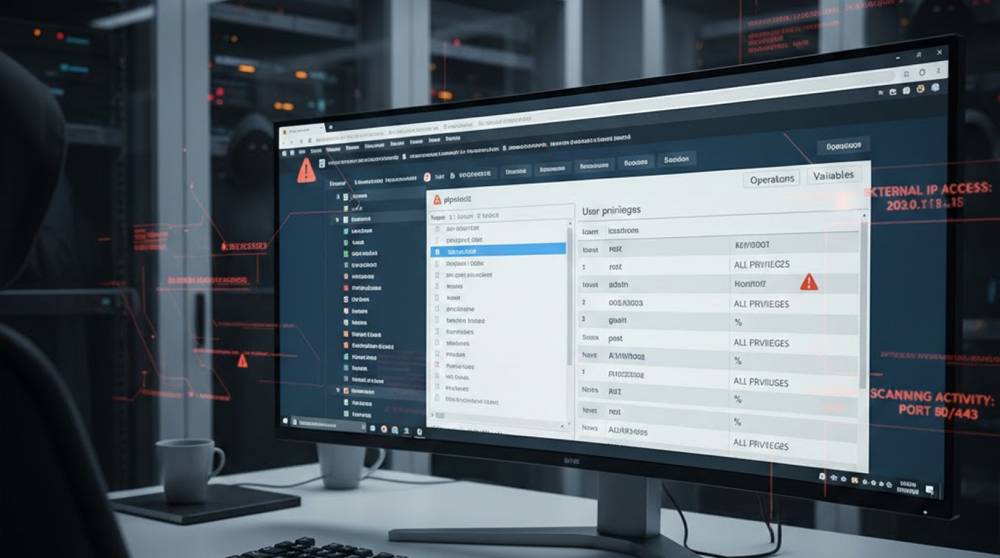
An exposed phpMyAdmin interface usually means:
1. Accessible from the internet
2. Protected only by weak credentials
3. Using default or outdated configuration
4. Running with high database privileges
No exploit is required if access already exists.
Common Real World Exposure Scenarios
Seen repeatedly during assessments and incidents:
1. phpMyAdmin left open on cloud VMs
2. Access restricted only by obscurity
3. Same credentials reused across environments
4. Admin login protected by HTTP auth only
5. No IP allow listing
The interface works exactly as designed. That is the problem.
Why Attackers Love phpMyAdmin
phpMyAdmin provides:
1. Direct SQL execution
2. File upload and export features
3. User and privilege management
4. Database dumping in one click
Once inside, attackers move fast.
How Attackers Find Exposed phpMyAdmin
They do not guess randomly.
1. Search Engine Indexing
Common paths are indexed constantly:
/phpmyadmin
/pma
/phpMyAdmin
/dbadmin
/mysql
2. Automated Scanning Tools
Attackers use mass scanners.
Example with Nuclei
nuclei -u https://target.com -t technologies/phpmyadmin/
This identifies exposed interfaces in seconds.
3. Simple curl Checks
curl -I https://target.com/phpmyadmin/
A 200 OK response is usually enough to proceed.
Weak Authentication Is The Main Way To Enter
The main ways attackers obtain access are from:
1. Default Credentials
2. Reused Database Passwords - Same username/password combos in other applications
3. Application Passwords Shared With Others
4. No Multi-Factor Authentication (MFA) OR Restrictions On Access via IP (Firewall)
None of the options listed above within this list would have prevented attackers from accessing phpMyAdmin via Weak Authentication Practices.
Example: Credential Stuffing Against phpMyAdmin
Attackers can re-use credentials from:
1. Application Configuration Files
2. Old Backups
3. Version Controlled Code Repositories (Git)
4. Employee / Company Breaches
5. phpMyAdmin accepts any MySQL credentials provided that it has been set up with those credentials.
What Happens After Login
Once authenticated, common attacker actions include:
1. Dumping entire databases
2. Modifying user records
3. Injecting web shells via SQL
4. Creating new database users
5. Enabling persistence
All through the UI.
Example: Writing a Web Shell via SQL
SELECT "<?php system($_GET['cmd']); ?>"
INTO OUTFILE "/var/www/html/shell.php";
If file permissions allow this, the server is compromised.
phpMyAdmin File Features Are Often Abused
Many environments forget these exist:
1. Import SQL from file
2. Export data to server
3. Save queries to disk
Attackers use them for persistence and lateral movement.
Testing Tools
Both attackers and testers use these tools.
Burp Suite
1. Analyze the login flow
2. Check the CSRF protection
3. Re-send authenticated request(s) (using Replay).
Nmap
nmap -p 80,443 --script http-title target.com
Often reveals phpMyAdmin via page titles.
Shodan
Organizations frequently discover exposure too late.
Shodan regularly indexes phpMyAdmin interfaces worldwide.
Why Security Breaches of phpMyAdmin Are Often Slow to Be Discovered
During a real investigation:
1. A lack of alert configuration
2. Legitimate database access was occurring
3. Query logs were not maintained
4. The use of backups concealed data loss
Eventual discovery typically occurs only when the data has been made available online.
What Actually Fixes This
Real remediation steps that work:
1. Never expose phpMyAdmin publicly
2. Restrict access by IP or VPN only
3. Remove phpMyAdmin from production entirely
4. Use separate, limited database accounts
5. Enable query and access logging
phpMyAdmin is an admin tool, not a public service.
How to Test Your Own Environment?
Quick checks:
curl https://yourdomain.com/phpmyadmin/
Search your codebase and servers for:
phpMyAdmin
pma
dbadmin
If it exists, assume it will be found.
Key Takeaways
1. phpMyAdmin exposure rarely requires exploitation
2. Credentials are the primary weakness
3. The UI provides powerful capabilities
4. Attackers move quickly once inside
5. Removal is safer than protection
If phpMyAdmin is reachable, the database is one login away.