The majority of influencers think they face the obstacles of gaining more followers and securing brand partnerships, but they overlook the more insidious and dangerous issue of deepfake scams. The deepfake scams do not gain much attention as these scams lack flashiness, but they are instead very subtle and manipulative, designed to manipulate a person’s trust.
Why All Influencers Are Targeted
There are a number of reasons why influencers are targets of deepfake scams. Here are a few of the most obvious:
1. Their audience has established a level of trust in them, which allows for the fast-paced spread of fake content.
2. Financial scams are very enticing to thieves because the nature of sponsorships and partnerships allows for a financial transaction.
3. Because of their connections to other high-profile people, scammers can use the "impersonation" aspect of deepfakes to gain access to more influenced targets.
Hence, wherever there is influence, there is a potential target for cyber criminals.
How Deepfake Scams Operate
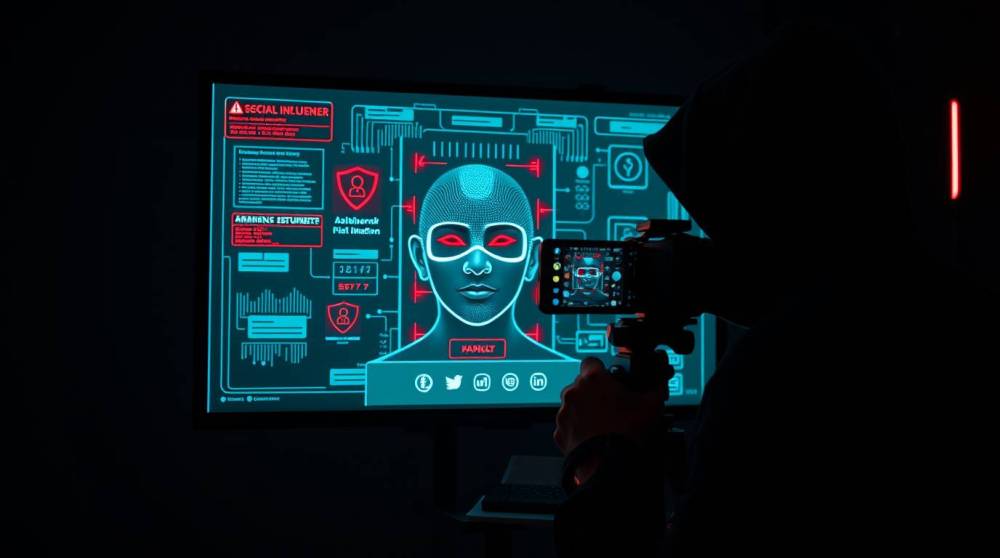
Deepfakes are essentially a combination of videos, pictures, and audio that are created using AI technology to convincingly mimic a specific person’s likeness. Various forms of communication are used by attackers in a few different ways, including:
1. Falsifying sponsorship requests: For example, an influencer sends a video or email to a brand requesting a form of payment and access to the influencer’s account.
2. Voice phishing: Scammers impersonate the voice of influencers to solicit sensitive information from staff members and partners.
3. Blackmail material: Attackers create fabricated videos and images specifically to obtain financial compensation, or to embarrass influencers and ruin their reputations.
4. Social engineering: Deepfake videos are used to convince a platform and partner to provide access to the influencer’s account.
The key to the success of deepfake scams lies in the premise that people believe the authenticity of the media being provided.
Ways You Can Stay Safe from Scammers
To keep yourself protected from scammers, you can implement several methods, which include using technology an intelligently choosing to create good habits. For example, to double check a request before giving personal information to a company; confirm the sponsorship or payment request through direct correspondence with the company.
To secure your online accounts with a strong password and use app-based two-factor authentication for extra security. Also, review your account(s) at least once a month and look for any unusual behaviours, such as missing items, unexpected posts or messages, or suspicious requests.
Additionally, educate your agents, managers and collaborators on the various methods of attack and help them to become aware of the risks. Finally, create a rapid response plan on how to contact others if you are impersonated or threatened in any way. Implementing these small changes to your security could dramatically reduce your risk of becoming a victim.
Awareness Is a Must
Scammers perform subtle, yet incredibly believable, attacks, rather than making loud, noticeable ones. In order to perpetrate the fraud, the scammer must work quickly and develop trust with their targets. By using the knowledge of these tactics and acting calmly while verifying the communications, an influencer is able to find and prevent fraud from escalating.
With the rise of deepfake scams, there is a high demand for the targeting of influencers. Scammers are leveraging trust with their victims, rather than finding weaknesses in their technology. By maintaining awareness, verifying every request for payment and securing passwords for online accounts, influencers can protect themselves from becoming victims of these scams.