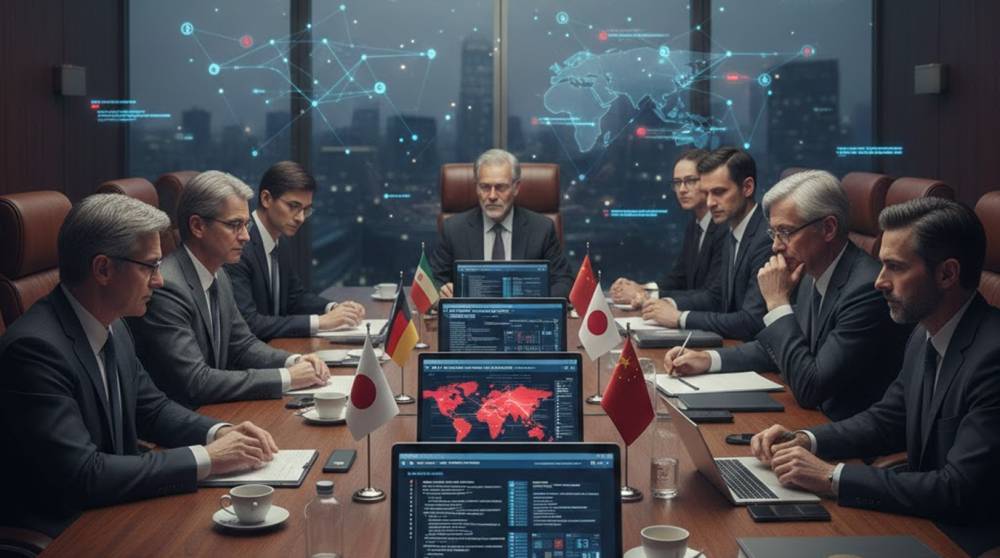
International discussions on cyber issues rarely resemble crisis meetings.
They look closer to trade talks or arms control negotiations.
The tone is measured.
Language is careful.
Progress is slow by design.
Behind closed doors, governments focus less on attribution and more on stability.
What these talks are actually about
Despite public statements, most cyber talks avoid naming specific incidents.
The core topics tend to be:
1. Reducing the risk of escalation
2. Setting expectations for state behavior
3. Protecting critical civilian infrastructure
4. Clarifying response thresholds
The goal is not trust.
It is predictability.
Why attacks are rarely discussed directly
Direct accusations often derail conversations.
Instead, participants rely on:
1. Generic scenarios
2. Past incidents without attribution
3. Hypothetical impact discussions
This allows progress without forcing public concessions.
A hospital outage may be discussed without naming the country involved.
Everyone in the room usually knows which incident is referenced.
How technical reality enters the room
Technical details appear, but only when tied to impact.
Common discussion points include:
1. What constitutes critical infrastructure
2. When an intrusion becomes a hostile act
3. How long-term access differs from disruption
4. Where espionage ends and coercion begins
Packet captures are not shared.
Business and societal consequences are.
Real-world examples
Example 1: Critical infrastructure limits
Several states informally agreed that healthcare systems should remain off-limits during peacetime operations.
This did not stop attacks.
It changed how governments respond afterward.
Example 2: Election interference boundaries
Cyber talks addressed what “interference” means without agreeing on enforcement.
The outcome was not enforcement.
It was shared vocabulary.
That vocabulary now shapes public statements and sanctions.
Example 3: Incident response hotlines
Some countries quietly established cyber incident communication channels.
These are rarely announced.
They exist to prevent misinterpretation during major incidents.
Why businesses should care
International cyber talks influence how incidents are interpreted.
They affect:
1. Whether an attack is framed as crime or state action
2. How quickly sanctions appear
3. How regulators respond after major breaches
4. What industries receive priority protection
Executives may never see these talks.
Their outcomes shape the environment companies operate in.
Common misconceptions at board level
Several assumptions often miss the mark:
1. That cyber norms prevent attacks
2. That attribution is always clear
3. That retaliation is automatic
4. That silence means inaction
In reality, restraint is often intentional.
What leadership can take from this
Cyber risk does not exist in a vacuum.
Board-level questions worth asking include:
1. Could this incident cross geopolitical thresholds?
2. Are our operations tied to national critical infrastructure?
3. How would a state-level response affect our market?
4. Do crisis plans account for regulatory and diplomatic delay?
These are governance questions, not technical ones.
International cyber talks are not about stopping attacks tomorrow.
They are about reducing misunderstanding when attacks happen.
Organizations that understand this dynamic are better prepared for regulatory shifts, public scrutiny, and long-tail consequences after major cyber incidents.